
Shoreline Notes
A Coastal Observation Needs a Viewing Height
Add your viewpoint to a shoreline note so differences caused by looking from a path, platform, or distant overlook are not mistaken for environmental change.
Understand the changing environments at the edge of the sea.
Add your viewpoint to a shoreline note so differences caused by looking from a path, platform, or distant overlook are not mistaken for environmental change.
Use a fictional shoreline count to see why the boundary of the observed area matters as much as the number written in the notebook.
Make a short coastal sound note from a safe public viewpoint, separating audible patterns from uncertain guesses about their sources.
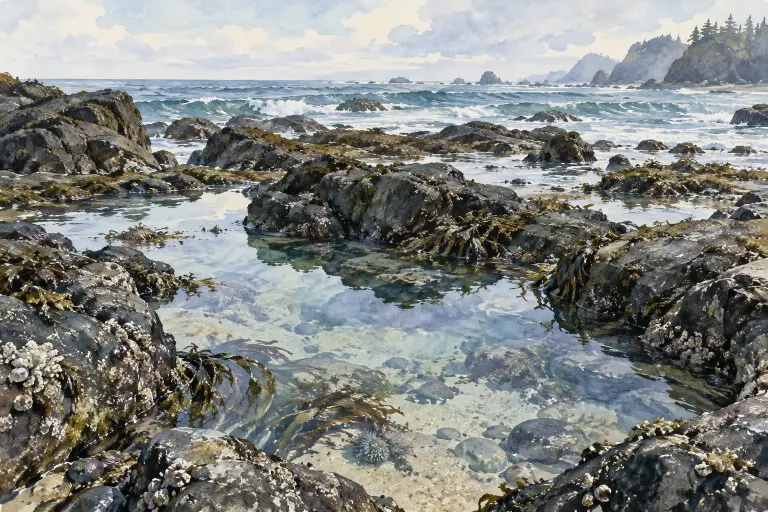
Plan a gentle tide-pool observation around local access guidance, a stable viewpoint and notes that do not require touching or moving marine life.
Distinguish an informal beach litter count from a repeatable monitoring survey by checking area, effort, categories and the collection method.
Read coastal water appearance carefully by separating visible suspended material from the broader questions that require measurements.
Add time, viewpoint and conditions to a coastal photograph so it becomes a useful observation rather than an isolated image.
The intertidal zone is alternately exposed and submerged. Its changing conditions help explain why life is distributed unevenly along a shore.