
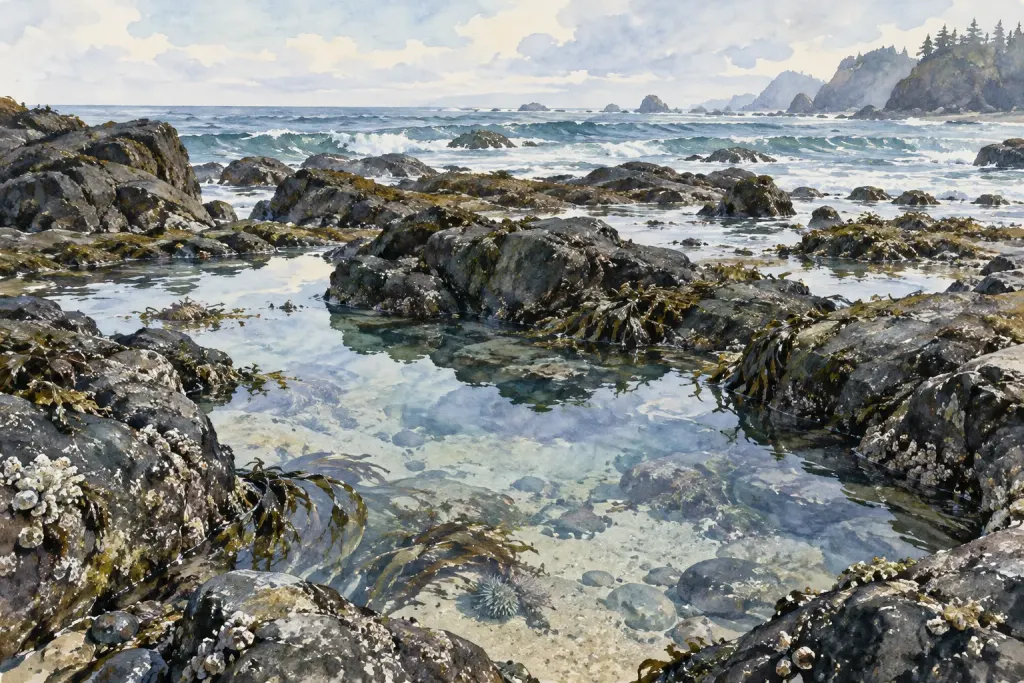
A tide pool can reward patient attention. You do not need to lift an animal or rearrange a rock to make a useful observation. Begin with a place you can view without disturbing its inhabitants.
Use local guidance first
Check current access, tide and weather information for the actual site. A low-tide prediction alone does not guarantee safe conditions or a clear return route.
The National Park Service’s tide-pooling guidance emphasises leaving organisms undisturbed, choosing footing carefully and watching the ocean. Its location-specific timings should not be copied as universal rules for another coast.
Choose one small question
From safe, permitted ground, observe one visible feature: where movement occurs, how an animal uses a crevice or which surfaces remain submerged. Keep your distance and stop if conditions or access become uncertain.
Describe shape and behaviour before guessing a species. A photograph can support later identification, but it may not contain all the features required.
Leave an honest note
Record time, viewpoint and the duration of observation. If nothing moved during that interval, say that rather than concluding the pool contains no active life.
Pair the note with context for shoreline photographs. The most useful record is often a careful description of a small event, with the habitat left as you found it.