
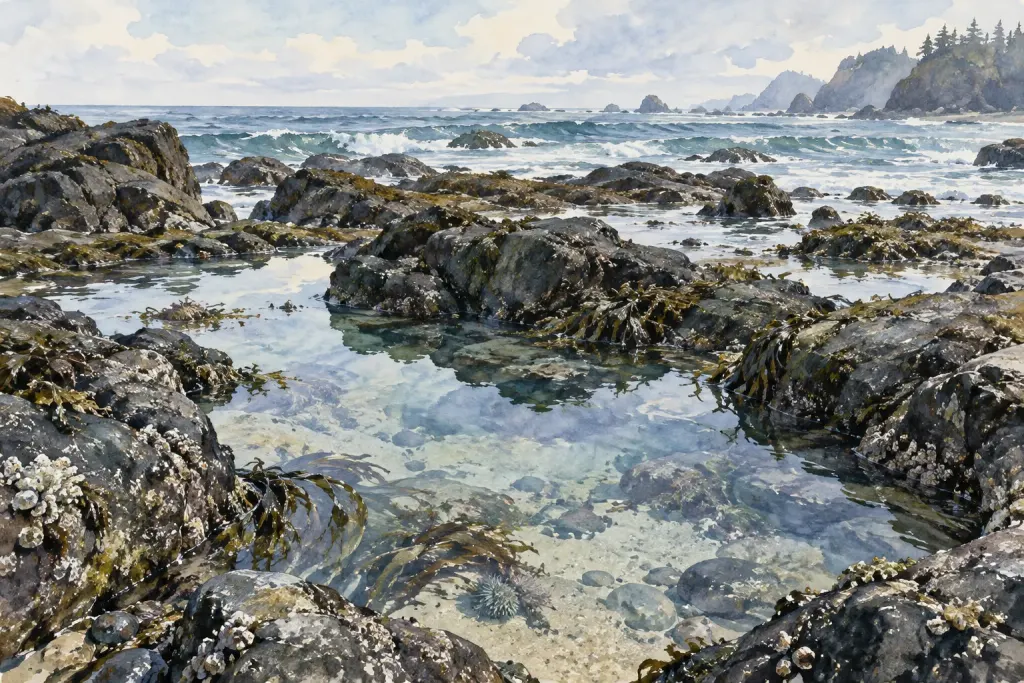
One photograph shows transparent shallows; another shows cloudy brown water. It is tempting to rank the two places immediately. But an image records appearance under particular conditions, not a complete assessment of water quality.
The useful first question is what the photograph actually allows you to observe.
Name the visible feature
Can you see the bottom? Are there suspended particles, surface reflections or shadows? Water depth, light and camera angle affect what is visible, so describe the image before explaining it.
NOAA’s explanation of turbidity discusses particles such as sediment and plankton that can reduce water clarity. That concept helps describe one property of the water, not every property at once.
Do not jump from colour to a single cause
A cloudy appearance can prompt questions about suspended material, recent conditions and the setting. It does not identify the material or establish its source on its own.
Likewise, a clear-looking surface cannot confirm that water is safe for swimming or drinking. For recreation, use current local advisories and the responsible authority’s information rather than a visual judgment.
Compare like with like
If you are following a coast through photographs, keep the viewpoint, timing and weather context as consistent as practical. Mark differences in conditions instead of treating every visual change as a long-term trend.
Photos can help document an observation worth investigating. They do not replace measurements designed to answer a specific environmental question.
Write a question the evidence can support
“The bottom is less visible in this image” is narrower than “the habitat has deteriorated.” The broader statement needs additional evidence and an appropriate comparison.
Our shoreline guide shows why the same place can look very different over time. A careful description leaves room to learn what changed instead of deciding the explanation from the picture alone.