
Shoreline Notes
The Same Shoreline Object Looks Different Wet and Dry
A pebble can look dark and richly coloured beside the water, then pale on the upper beach. Before describing two photographs as different materials,…
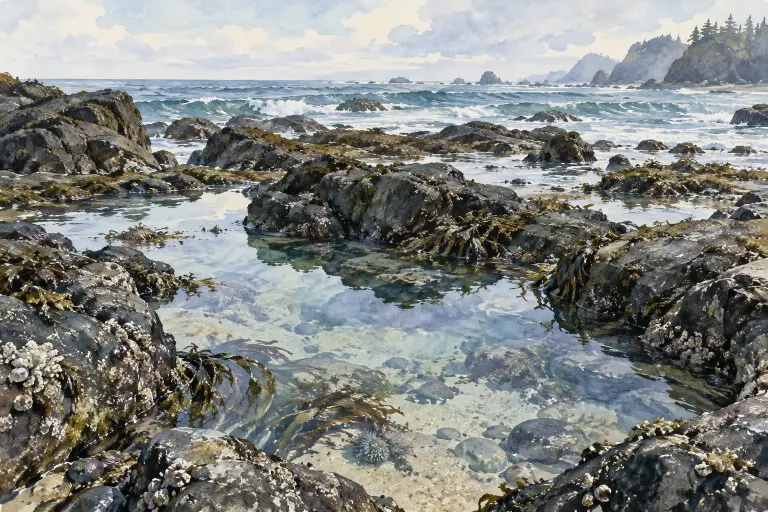
Understand the changing environments at the edge of the sea.
A pebble can look dark and richly coloured beside the water, then pale on the upper beach. Before describing two photographs as different materials,…
Where you can safely reach the shore shapes what you are able to notice. A notebook that records only the beach itself can hide the selection created by its…
A nesting beach may report many turtle nests during a season, but that number cannot automatically be read as the number of females that visited. The unit…
Separate recording duration from playback duration when interpreting a coastal time-lapse, and look for missing intervals before describing change.
Understand the difference between diurnal, semidiurnal and mixed tidal patterns, without treating a simple diagram as a local tide prediction.
Sea foam forms through interacting water, air and dissolved material. Observe it from shore while keeping appearance separate from claims about cleanliness or cause.
Ocean colours on a bathymetric map encode depth rather than the water’s visible appearance. Start with the legend, contours and data notes before comparing places.
Understand the size-based description of microplastics while recognising why a tiny coloured fragment is not automatically an identified plastic sample.