
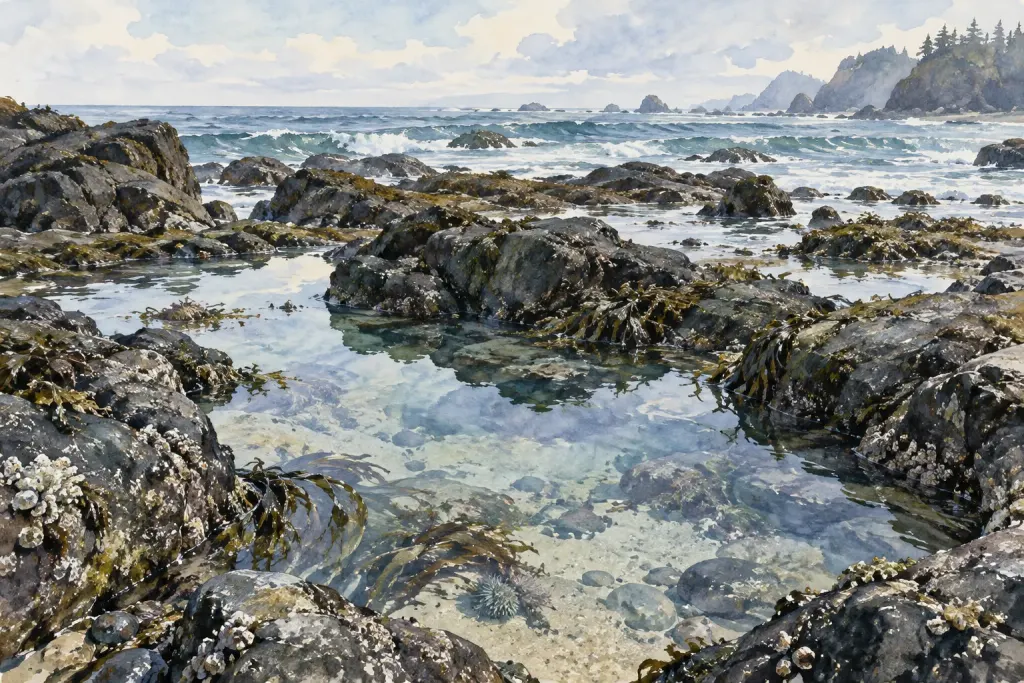
Two pictures of the same coast can seem to show different places. In one, water covers the rocks; in the other, pools and dark surfaces appear. That changing strip is more than a temporary beach. It is a place where organisms must cope with repeated changes in their surroundings.
Name the strip correctly
The NOAA explanation of the intertidal zone defines it as the coastal area between high and low tides. It occurs on rocky shores, sandy beaches and mudflats, so a tide pool is one expression of the zone rather than its entire definition.
Exposure is uneven. Higher areas remain out of the water for longer, while lower areas spend more time submerged. Organisms differ in their ability to resist drying, tolerate wave energy and compete for space. These differences help shape where they occur.
Read the pattern without rushing to a name
For a simple desk-based exercise, compare two dated photographs taken from the same fixed viewpoint. Identify the water edge, the exposed surface and any pools. Write down what changed before trying to identify individual organisms.
A dark band on rock may be a useful observation, but it is not automatically a particular species. Lighting, wetness and image quality can all complicate interpretation. Use a local field guide or expert resource when an identification matters.
Time belongs in the notes
A shoreline image is a moment, not a permanent map of accessible ground. Record the date, time and location if they are known. If they are missing, say so. Do not infer a precise tide height or a safe route from an attractive photograph.
This article explains a habitat; it is not a forecast or a guide to entering the water. For an actual visit, follow local access rules, current conditions and official coastal safety guidance. You can learn a great deal from an established viewpoint without disturbing a pool or moving an animal.
Look beyond the exposed rocks
The coast continues underwater and upstream. Read about seagrass meadows for a different kind of shallow-water habitat, or follow a river into an estuary. Each adds another layer to the shoreline you thought you already knew.