
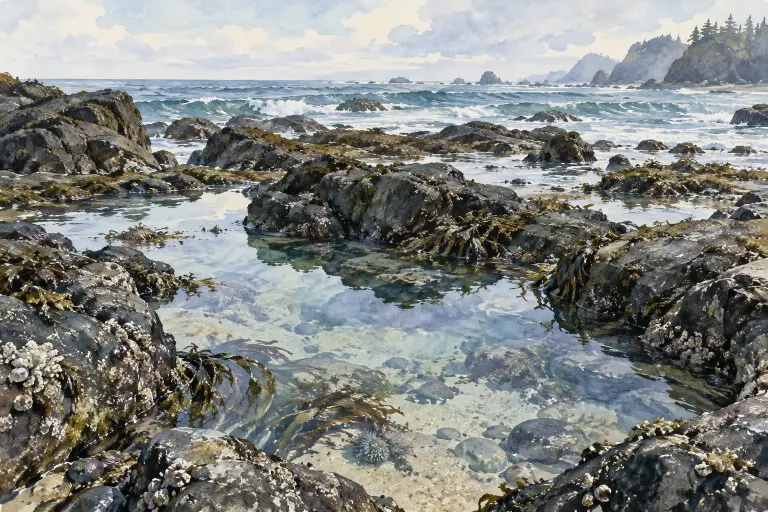
Coastal Connections
A Wave Can Pass Without Carrying the Same Water Across the Bay
Separate a travelling wave pattern from the movement of water itself, then use a careful shore observation to notice what a short view can and cannot explain.
Separate a travelling wave pattern from the movement of water itself, then use a careful shore observation to notice what a short view can and cannot explain.
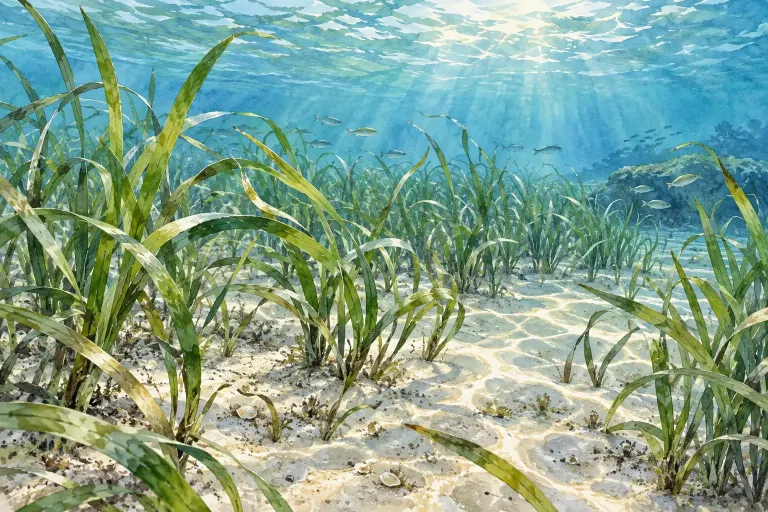
Make a useful observation of an unfamiliar shore organism through location, visible features, and non-intrusive photographs while leaving identification open.
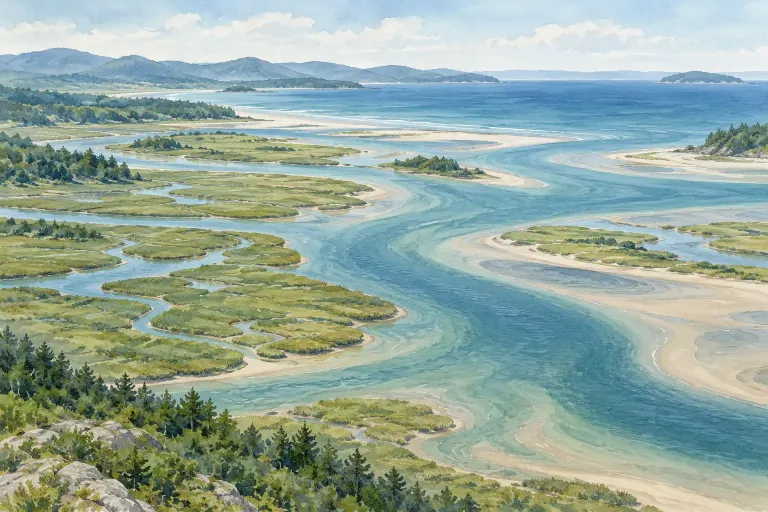
Use the edges of a photograph to define what it documents, and avoid treating a selected view as a complete assessment of a shoreline.
Add your viewpoint to a shoreline note so differences caused by looking from a path, platform, or distant overlook are not mistaken for environmental change.
Understand the size-based description of microplastics while recognising why a tiny coloured fragment is not automatically an identified plastic sample.
Read ocean light zones as a guide to changing conditions, while keeping depth, water clarity, and the limits of a simple diagram in view.
Use a fictional shoreline count to see why the boundary of the observed area matters as much as the number written in the notebook.
Learn what marine snow means, then follow a simple surface-to-depth sketch that distinguishes sinking organic material from ordinary weather snow.