
Coastal Connections
Ocean Salt Has a History Beyond the Nearest River
Follow a simple account of ocean salts from weathered rock and seafloor processes, keeping sources separate from local changes in salinity.
Follow a simple account of ocean salts from weathered rock and seafloor processes, keeping sources separate from local changes in salinity.
Understand the difference between diurnal, semidiurnal and mixed tidal patterns, without treating a simple diagram as a local tide prediction.
Read an ocean temperature profile by following depth as well as temperature, and see why a surface measurement cannot describe the whole water column.
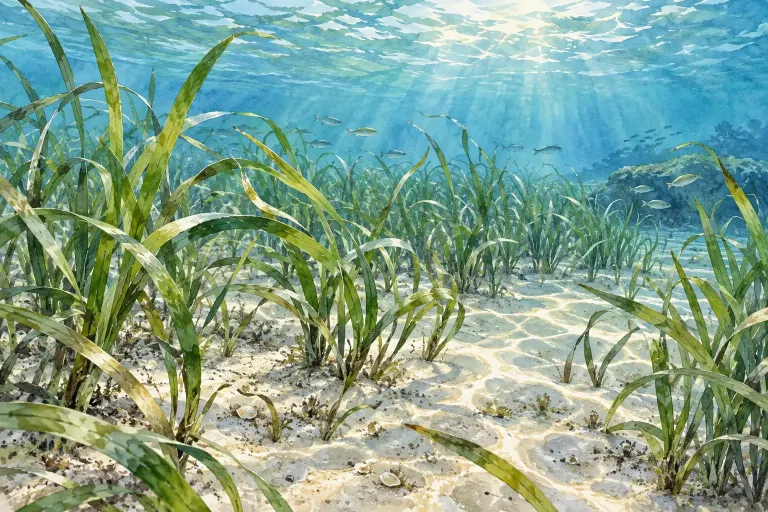
Kelp forms underwater canopies that provide food and shelter. Read the forest comparison as a description of habitat structure, while keeping kelp distinct from seagrass.
A beach can contain mineral grains and fragments of biological material. Learn why colour alone is not enough to tell the complete origin of its sediment.
Sea foam forms through interacting water, air and dissolved material. Observe it from shore while keeping appearance separate from claims about cleanliness or cause.
Ocean colours on a bathymetric map encode depth rather than the water’s visible appearance. Start with the legend, contours and data notes before comparing places.
Separate what you hear from shore from claims about sound underwater, then read a marine sound report with the measurement setting in view.