
Coastal Connections
Ocean Salt Has a History Beyond the Nearest River
Follow a simple account of ocean salts from weathered rock and seafloor processes, keeping sources separate from local changes in salinity.
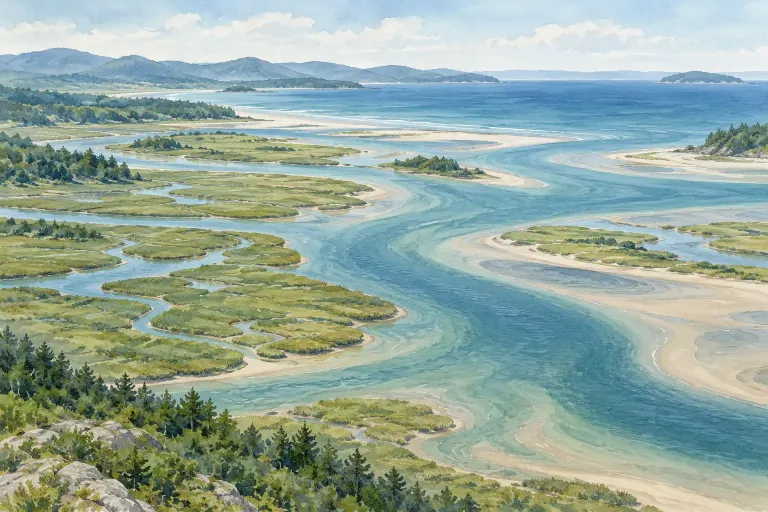
Follow the connections between rivers, shorelines and the open ocean.
Follow a simple account of ocean salts from weathered rock and seafloor processes, keeping sources separate from local changes in salinity.
Read an ocean temperature profile by following depth as well as temperature, and see why a surface measurement cannot describe the whole water column.
A beach can contain mineral grains and fragments of biological material. Learn why colour alone is not enough to tell the complete origin of its sediment.
Separate what you hear from shore from claims about sound underwater, then read a marine sound report with the measurement setting in view.
Separate a travelling wave pattern from the movement of water itself, then use a careful shore observation to notice what a short view can and cannot explain.
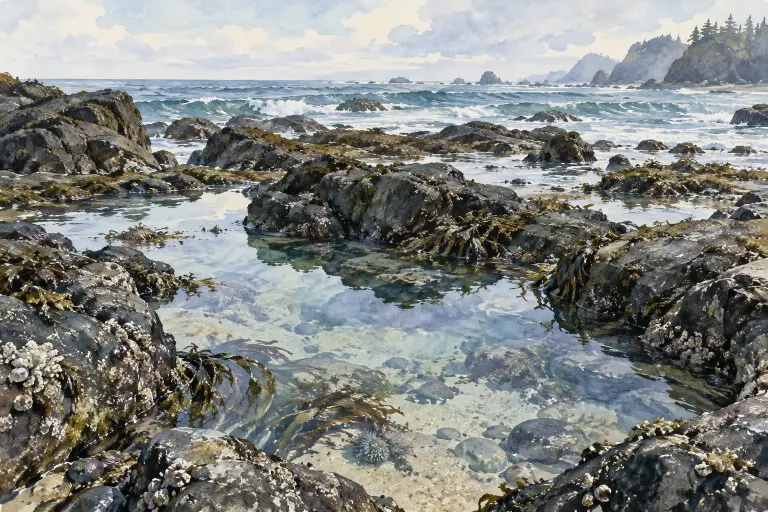
Use the edges of a photograph to define what it documents, and avoid treating a selected view as a complete assessment of a shoreline.
Look beyond the silhouette of a mangrove forest to understand how roots, water and sediment contribute to a varied coastal habitat.
Understand the basic movement behind ocean upwelling and why a cool patch of water alone is not enough to identify the process locally.