
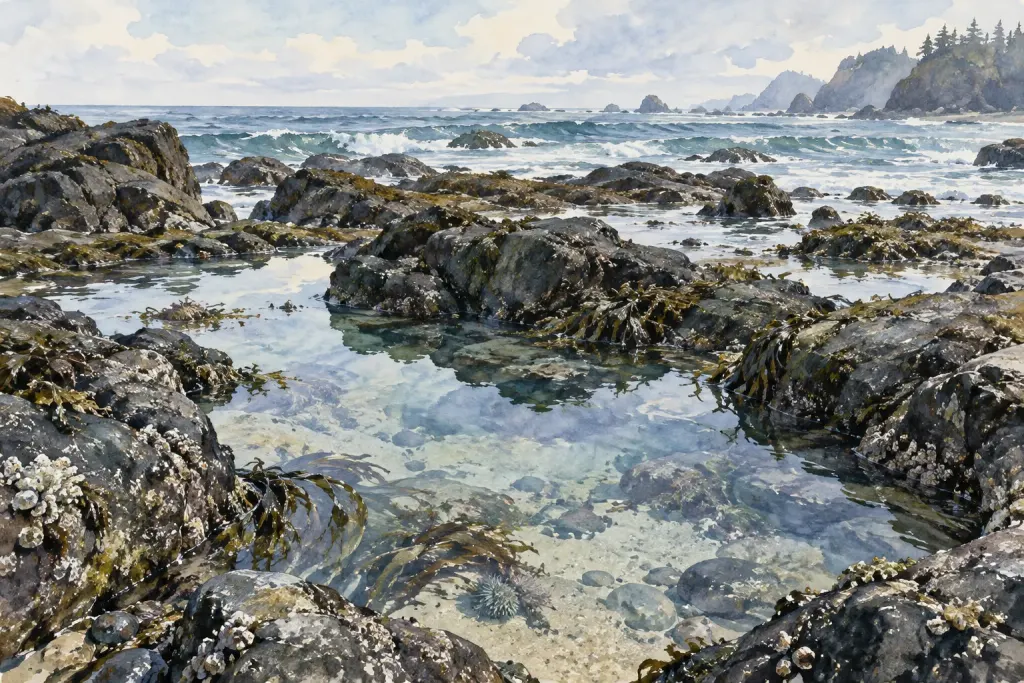
A band of pale foam gathers at the edge of a wave. It may be tempting to call it pollution immediately, or to assume that anything naturally formed must be harmless. A photograph alone cannot settle either conclusion.
Begin with how bubbles can persist
NOAA’s explanation of sea foam describes foam forming when seawater containing dissolved organic matter is agitated. The same visible category can occur under different conditions, so appearance is a starting observation rather than a complete chemical analysis.
For a shore-side note, describe the extent, colour and movement that you can actually see. Stay in a safe public area and do not handle unknown foam to investigate it. Follow local notices where concerns have been reported.
Record the setting around the foam
Does it collect in a narrow line, spread across wet sand or move back with each wave? Note the time and location, and include enough surrounding shore in a photograph to show scale. Avoid cropping the scene into an apparently continuous blanket if it was only a small patch.
Separate those details from explanations. “Foam collected beside the rocks” is an observation. “A discharge caused it” requires evidence that the view by itself does not provide.
Look for the relevant local information
If you want to understand a particular occurrence, seek observations or notices from the responsible local authority and check their dates. A general article explains mechanisms; it does not diagnose today’s beach.
Our discussion of why clear water is not a complete water-quality report uses the same distinction. Coastal curiosity becomes more useful when it preserves what was seen, identifies what remains unknown and chooses a source capable of answering the local question.