
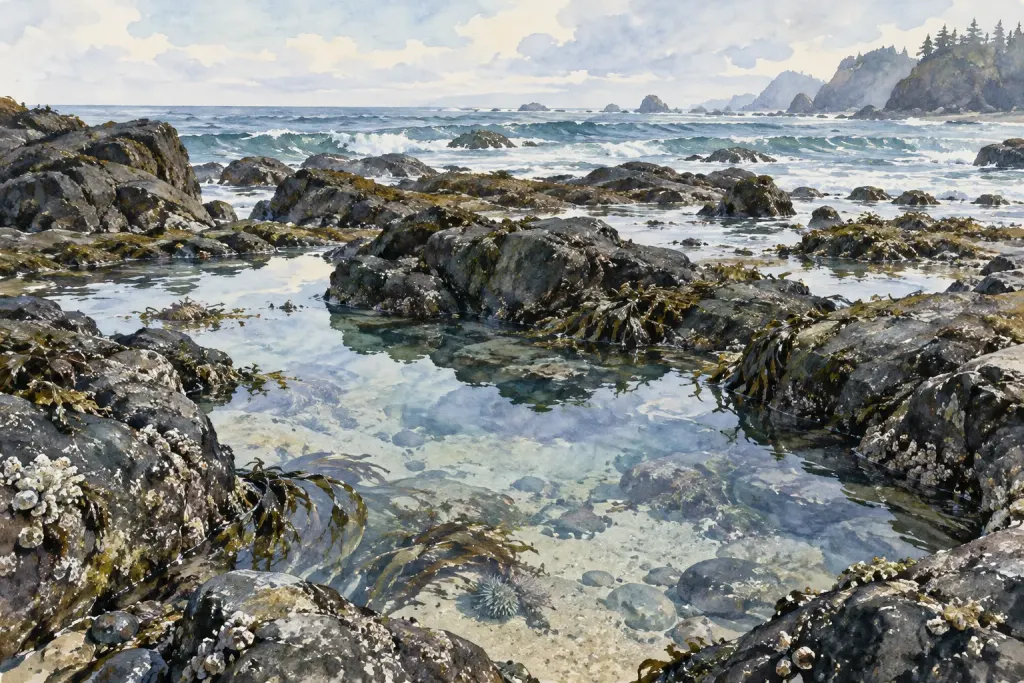
A line of stranded seaweed can look like something left behind after the sea has finished with the beach. It can also be part of an active habitat, connecting material from the water with life on the shore.
Recognise the wrack line
The National Park Service’s beach ecology page describes wrack as gathered seaweed and other washed-up material. Small organisms use this material, and decomposers within it can become food for shorebirds.
The exact material and species vary by coast. Do not assume a description of one region identifies everything on a different beach.
Observe its position and texture
From an accessible area, note whether the line is narrow, scattered or arranged in several bands. Describe what you can see without pulling the material apart or disturbing feeding wildlife.
Natural wrack and manufactured litter are not interchangeable categories. If joining a cleanup, follow the organiser’s local guidance rather than treating all stranded material as something to remove.
Keep the observation modest
A single visit does not show how long the material has been there or exactly where it originated. Record those as questions unless you have supporting evidence.
Our guide to the changing shoreline provides context for reading these traces. What first appears untidy may reveal a connection between the water, the beach and the animals using both.