
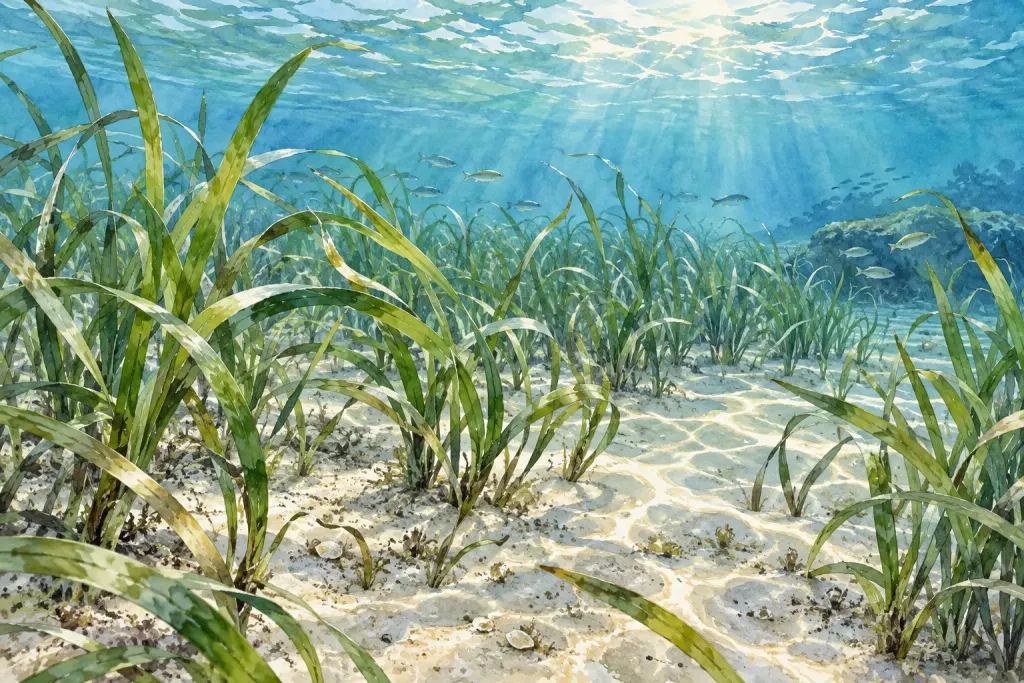
A seagrass meadow may look like a simple band of green beneath shallow water. A photograph captures the leaves, but much of the story people mean by blue carbon is less visible.
NOAA describes blue carbon as carbon captured by ocean and coastal ecosystems. In coastal habitats such as seagrass meadows, mangroves and salt marshes, important carbon storage occurs below ground as well as in visible vegetation.
Distinguish the habitat from the measurement
Recognising a type of coastal habitat is a starting point. It does not tell you the quantity of carbon stored at a particular site or the rate at which that store is changing.
Those claims require methods, measurements and clearly defined boundaries. A broad educational illustration should not be mistaken for evidence about a real restoration project.
Ask what a project actually reports
When reading about blue carbon, identify the location, habitat, time period and type of result. Is the source discussing a measured stock, a modelled estimate or an anticipated future benefit?
Keep those categories separate. A planned activity and a verified outcome are not interchangeable.
Look beyond a single benefit
NOAA places blue carbon within the wider context of coastal habitat conservation. A site’s value cannot be reduced to an attractive carbon number without considering the habitat and the people connected to it.
Ask what local ecological evidence and monitoring are available. Avoid assuming that every project using the same phrase has the same design or results.
Return to the living landscape
The next time you read a caption about a meadow or marsh, notice what is visible and what requires further evidence. That distinction makes the concept more useful, not less interesting.
Start with our seagrass guide if the habitat itself is unfamiliar. The leaves invite attention; the hidden context gives the story depth.