
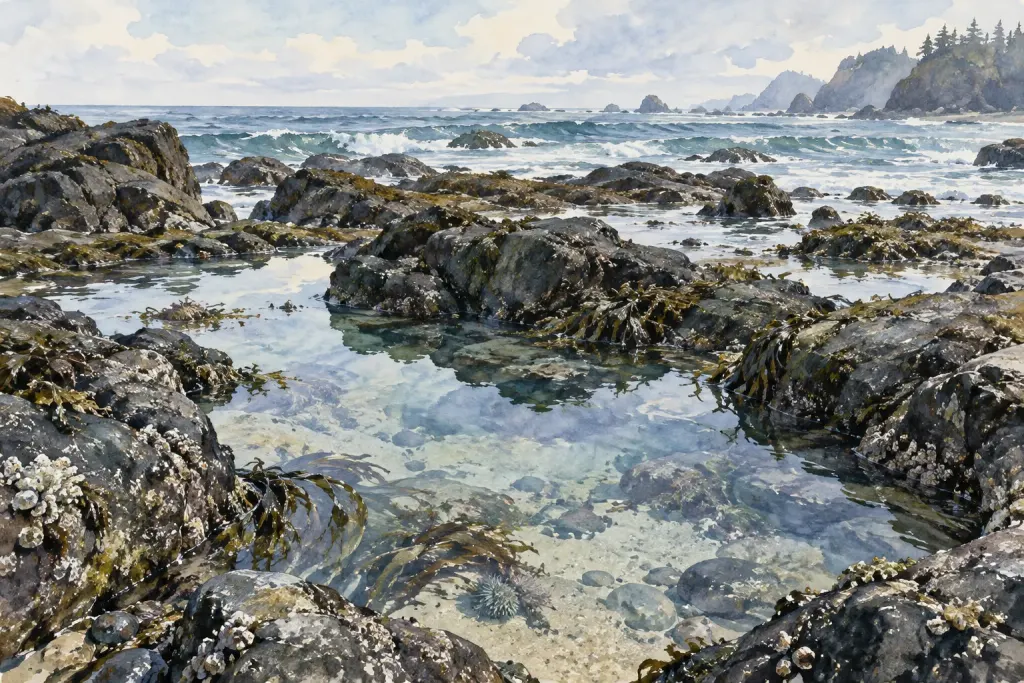
A sheltered bay can seem almost silent from a bench above the water. That is an observation about a particular listening position. It is not a measurement of everything happening beneath the surface.
The distinction matters when a photograph or a short visit becomes the basis for a claim that a place has little underwater noise. What you could hear and what a marine instrument recorded are different kinds of evidence.
Sound travels through a different setting
NOAA explains that sound travels faster in seawater than in air, and that temperature and pressure affect its movement through the ocean. Under suitable conditions, underwater sound can be detected at considerable distances.
Those facts do not let us infer the underwater sound level of a particular bay from a view of its surface. They explain why the question needs its own observations and measurement context.
Write the position into your shore note
For a personal notebook, record where you stood, when you listened and what you actually heard. “From the upper path, I heard gulls and one passing engine” is a bounded observation. “The bay contained no other sound” goes beyond it.
Include ordinary limitations: conversation nearby, wind around your ears, or a short listening period. You do not need to turn a walk into a survey. The purpose is to keep a pleasant impression from becoming an unsupported environmental finding.
Read a sound report with new questions
When you encounter an underwater recording or a report, look for the recording location, depth, period and equipment information. Ask whether the material is an illustration, a selected excerpt or part of a systematic measurement. A short edited clip cannot stand in for every hour of a season.
Avoid comparing bare sound-level numbers from different settings without checking their units and reference conventions. If the report does not explain them, leave that comparison open.
Our exercise on listening to the coast before naming each sound remains useful ashore. It gives you a careful description of your experience while leaving the underwater question available for evidence suited to it.