
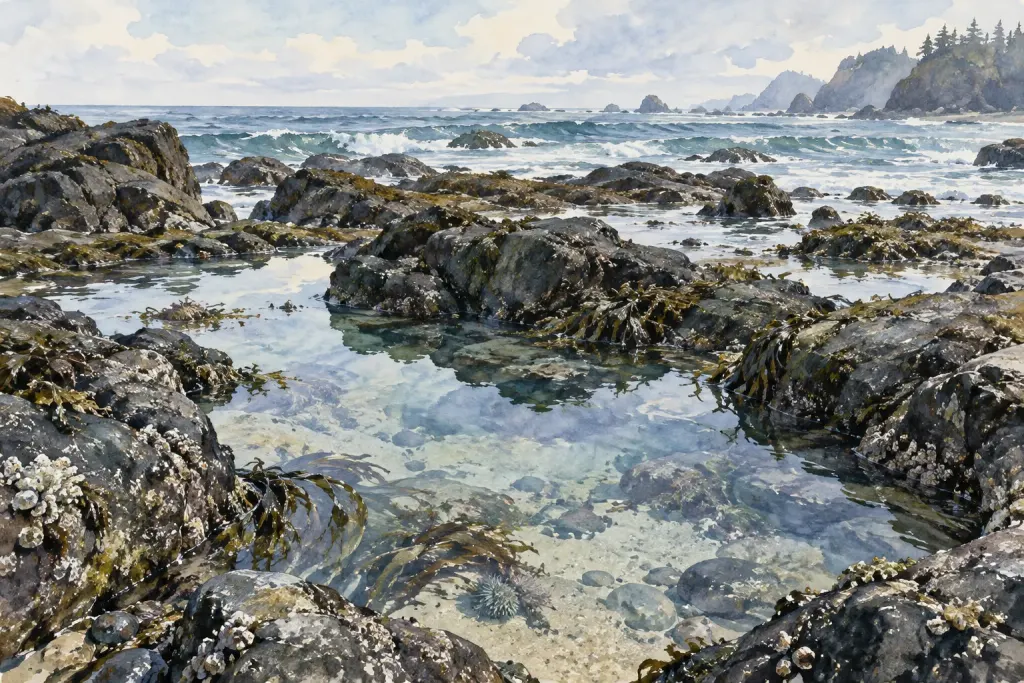
A coastline is not only a view. From a safe, permitted stopping place, a short listening pause can reveal recurring sounds that are easy to overlook while walking.
Choose a bounded interval
Listen for two minutes and note a few distinct events. Use descriptions such as repeated low wash, brief high call or distant engine when the source is uncertain.
Do not close off awareness of the surroundings or move toward a sound in an unsafe area. The exercise belongs at a suitable viewpoint, not at an exposed edge or on a route that requires attention.
Separate pattern from source
Record whether the sound repeats, overlaps another sound or changes in strength. Identifying the source is a separate question. A plausible guess should remain labelled as a guess until you can check it.
If making a recording, respect other visitors’ privacy and local rules. A written note is enough for the exercise.
Add the conditions
Note wind impression, time and viewpoint. These details can help explain why a later listening session differs, without proving a cause from two visits.
Use the note beside a shoreline photograph. The sound record adds another kind of observation while reminding you that a single visit captures only a small part of a coastal place.