
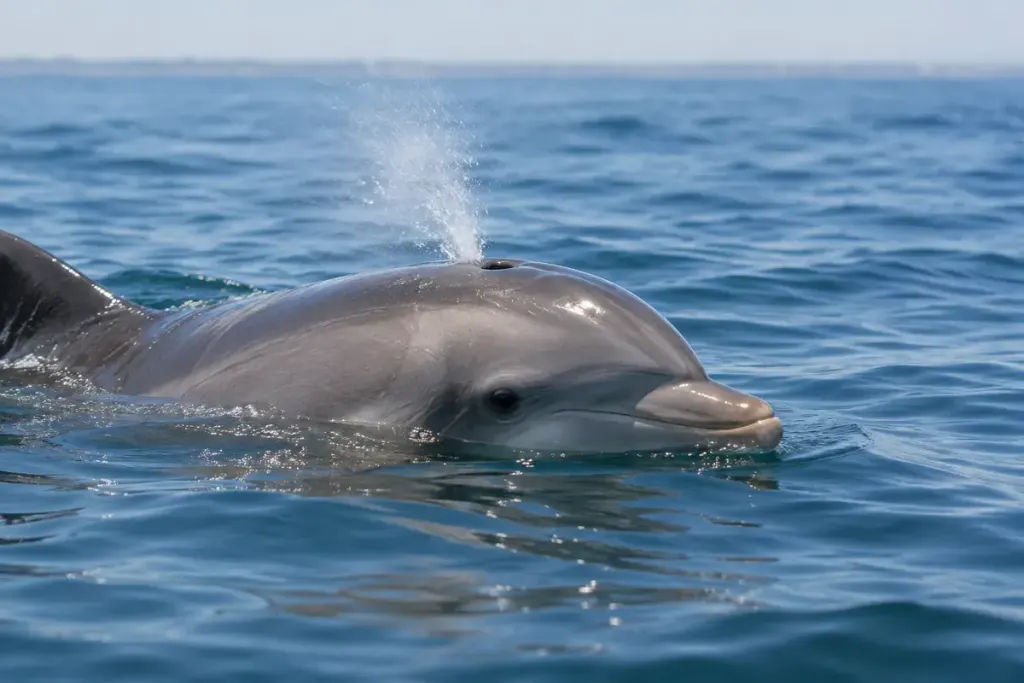
A dorsal fin can draw attention before the rest of an animal appears. But a similar outline does not mean that sharks and dolphins obtain oxygen in the same way. Looking for the breathing structure changes what you notice in a photograph or aquarium explanation.
Follow the route of the air
NOAA explains that dolphins are mammals which breathe air using lungs. Their blowhole acts as an opening through which they breathe at the surface. Fish obtain oxygen through gills; a shark’s gill slits therefore belong to a different breathing arrangement.
On a labelled educational image, identify the blowhole or gill slits before concentrating on the fin. Keep the source’s species identification attached to the image. A distant shape on the water may not provide enough information for you to identify the animal yourself.
Avoid turning one sighting into a timetable
An animal disappearing below the surface does not give you a complete account of its dive, and one breathing interval should not become a universal rule for the species. Record the visible event and the observation conditions instead.
For a classroom comparison, draw two simple routes: air entering a dolphin’s lungs, and water passing across a fish’s gills. Label these as explanatory sketches rather than anatomical diagrams. The useful contrast is the source and route of oxygen, not a contest over which animal is better adapted. Both belong in the ocean, but their bodies solve the breathing problem differently.
AI-generated editorial illustration; not a documentary photograph.