
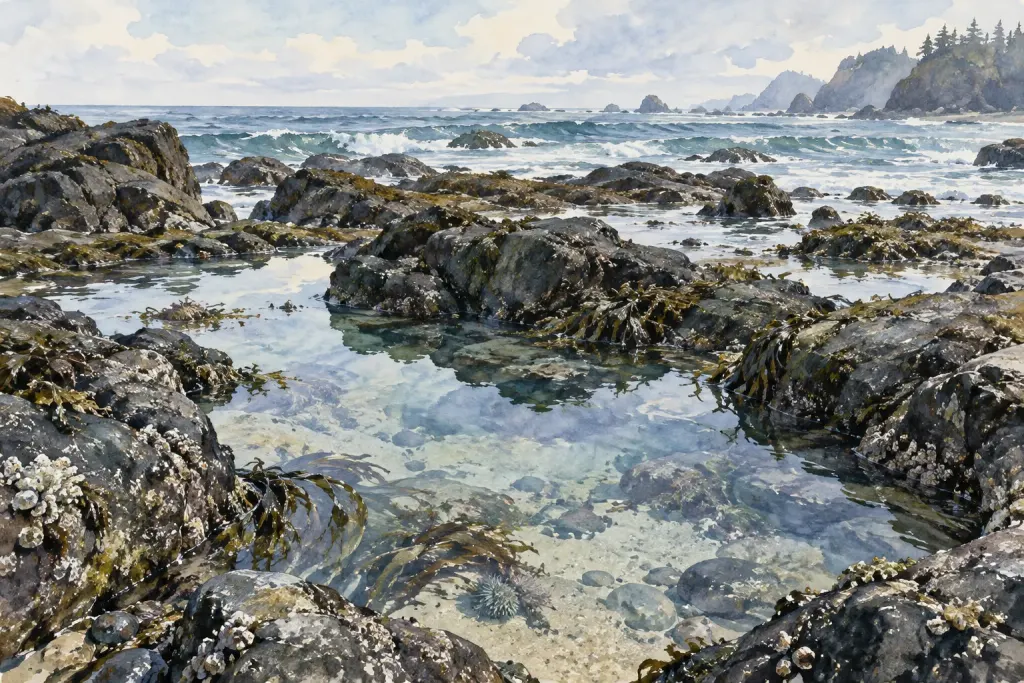
A pebble can look dark and richly coloured beside the water, then pale on the upper beach. Before describing two photographs as different materials, consider whether surface conditions changed.
Observe an accessible object without collecting it or moving habitat material. Record whether its surface appears wet, partly drying or dry, and note the light and viewing angle. Do not approach waves or unstable edges to produce a comparison.
If you already own a suitable ordinary stone, a separate home observation can explore appearance under controlled conditions. Make clear that it is a demonstration, not evidence about the composition of a particular beach.
Use a simple note with three entries: visible colour, surface condition and uncertainty. Avoid turning a stronger colour into a claim about mineral content. A photograph does not supply all the information needed for identification.
When comparing images from different visits, retain the originals rather than adjusting each until they look similar. Automatic camera settings and changing illumination can contribute to the difference too.
The useful result is a more careful description: “darker while wet in this light” says what was observed. It leaves the material’s identity open and helps explain why a familiar stretch of shore can seem visually transformed without its stones having changed.
Illustration selected from this site’s existing collection.