
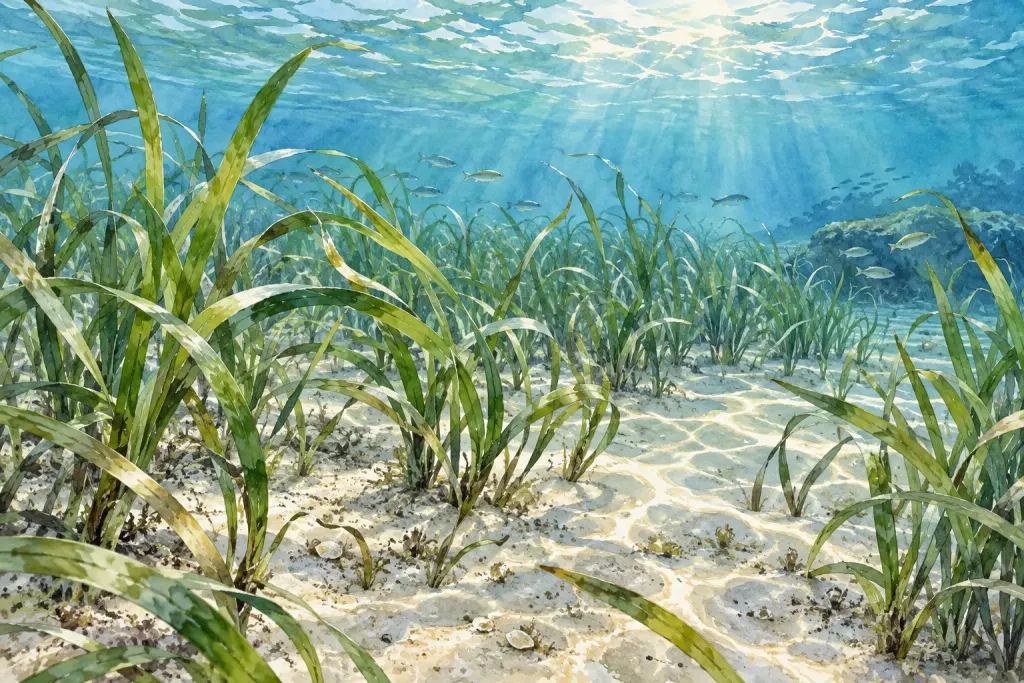
The phrase “kelp forest” immediately suggests tall growth, shade and animals moving between it. That comparison helps us picture the habitat, but it should not turn kelp into a submerged version of a tree.
Start with what kelp is
NOAA’s introduction to kelp forests describes kelp as large brown algae occurring in cool, relatively shallow coastal waters. Dense growth creates spaces used by many other organisms for food and shelter.
The word forest points to an arrangement and a habitat. It is not a claim that the organisms building it have the same structure or classification as trees on land. Keep the comparison useful without letting it replace the biological distinction.
Separate kelp from the other underwater greenery
Our article on seagrass as a flowering plant introduces a different coastal habitat. A photograph containing long green forms is not enough to treat the two as interchangeable. Read the source’s identification and the location before naming what is shown.
For a notebook exercise, make two columns: the organism identified by the source, and the habitat role described. This helps prevent a broad visual resemblance from becoming a mistaken label.
Ask what a changing canopy does to the habitat
NOAA also describes seasonal changes and repeated monitoring of kelp forests. A single image shows one view at one time; it does not establish a long-term trend in extent or condition.
When reading a report, look for repeated locations, dates and observations of associated life. The interesting question is not only how much kelp appears in a picture, but how the habitat and the organisms using it are being observed over time.